
Table of Contents
Understanding RMC Plants Before You Invest
India’s construction sector has moved decisively toward ready mix concrete over the last decade. National highway programs, metro rail expansion, smart city projects, and large residential townships all depend on a steady, quality controlled supply of concrete that onsite mixing simply cannot match at scale. This shift has made the ready mix concrete plant, commonly called an RMC plant, one of the most important capital investments a construction company or RMC supplier can make.
Choosing the wrong plant type or capacity creates problems that surface months after commissioning: idle production hours, inconsistent mix quality, or a plant that cannot keep pace with peak site demand. This guide explains what an RMC plant is, the types available, the components that make one up, and a practical framework for matching plant capacity to your project pipeline, so the decision is based on your actual production needs rather than guesswork.
 Call Us Now!
What Is an RMC Plant (Ready Mix Concrete Plant)?
A ready mix concrete plant is a facility that batches cement, aggregates, water, and admixtures in precise, pre calculated proportions and mixes them into concrete before the material ever reaches a construction site. The finished concrete is loaded into transit mixers and delivered ready to pour, or produced on a captive site to feed an ongoing project directly. This differs from traditional onsite mixing, where materials are combined in small batches using a mixer machine positioned at the construction site itself.
RMC plants serve two broad categories of buyers. The first is commercial RMC suppliers who sell ready mixed concrete to multiple builders and contractors in a region, treating the plant as a standalone business. The second is contractors, infrastructure companies, and precast manufacturers who install a plant to serve their own large projects, such as a highway stretch, metro corridor, or industrial complex, where transporting concrete from a third party supplier would be inefficient or too slow for the pour schedule.
Types of RMC Plants: Wet Mix, Dry Mix, and Site Configuration
RMC plants are classified along two independent dimensions: how the concrete is mixed, and how the plant itself is configured for the site. On the mixing side, wet mix plants combine all materials in a mixer unit at the plant itself, producing fully mixed concrete before it leaves the batching area. Dry mix plants weigh and load the dry materials into the transit mixer, which then completes the mixing during transport to site. Wet mix plants generally give tighter quality control and are preferred for structural concrete, while dry mix plants suit projects where transit time allows mixing en route.
On the configuration side, plants are built as stationary inline units for continuous high volume production, compact units that need no separate foundation and can be erected quickly, or mobile units mounted for frequent relocation between sites. The right configuration depends less on your target output and more on how long the plant will stay at one location and how much site preparation time you can afford before production needs to begin.
| Plant Type | Mixing Approach | Site Footprint | Best Suited For |
| Inline (stationary) | Wet mix, three batch cycle | Requires foundation, larger footprint | High volume, continuous RMC supply and infrastructure projects |
| Compact | Wet mix, single weighing system | No foundation needed, small footprint | Fast deployment, medium volume, space constrained sites |
| Mobile | Wet or dry mix | Chassis mounted, relocates easily | Multiple short duration sites or remote project locations |
| Dry mix | Mixed in transit mixer drum | Simple layout, lower capital cost | Projects with longer haul distance to the pour location |
Core Components of a Ready Mix Concrete Plant
Every RMC plant, regardless of type, is built around the same functional groups, though their scale and automation level vary by model. Understanding these components helps a buyer evaluate quotations and specification sheets on equal terms rather than comparing plants on price alone. A plant with identical rated capacity to a competitor can still perform very differently on site depending on the quality of these individual systems, particularly the weighing accuracy and mixer design.
- Aggregate storage and feeding: bins or bunkers that hold coarse and fine aggregate, feeding the weighing system through belt or apron feeders.
- Cement storage: a silo that holds bulk cement and feeds it into the weighing hopper through a screw conveyor.
- Weighing and batching system: load cell based hoppers for aggregate, cement, water, and admixture, typically governed by a PLC for repeatable accuracy.
- Mixer unit: twin shaft or pan mixers for wet mix plants, producing homogeneous concrete before discharge.
- Water and admixture dosing: metered systems that add water and chemical admixtures within the tolerances required for the target concrete grade.
- Control cabin: houses the PLC and operator interface, storing mix designs and generating batch records for quality documentation.
How to Determine the Right RMC Plant Capacity for Your Business
Plant capacity is usually quoted in cubic meters of concrete per hour, and getting this number right is the single most consequential decision in plant selection. A plant that is undersized cannot keep pace with your project’s pour schedule, forcing you to run extended shifts or turn away business. An oversized plant sits idle for large parts of the day while still carrying full maintenance, staffing, and power costs.
A practical starting point is to work backward from your actual concrete demand rather than from a target output figure. The calculation below gives a working estimate; site specific factors such as multiple simultaneous pours or seasonal demand spikes should be layered on afterward.
- Step 1: Total the concrete volume in cubic meters your business needs to supply across a typical production day.
- Step 2: Divide that volume by the number of hours the plant will realistically run per day, accounting for shift patterns.
- Step 3: Add a buffer of 15 to 25 percent to the resulting hourly figure to absorb peak demand days and planned maintenance downtime.
- Step 4: Match the buffered figure against a plant’s rated output, keeping in mind that most batching systems achieve close to, but not exactly, their theoretical maximum.
Matching Capacity to the ATP Series
Apollo Inffratech’s ATP series is built to cover this entire range without forcing a buyer to compromise between two mismatched capacity bands.
| Capacity Range | ATP Models | Typical Buyer Profile |
| 25 to 31 m3 per hour | ATP 25, ATP 31 Compact | New or small RMC operators, residential and small commercial projects |
| 45 to 75 m3 per hour | ATP 45, ATP 60, ATP 75 (Compact or Inline) | Established RMC plants, urban construction, commercial developments |
| 90 to 120 m3 per hour | ATP 90, ATP 100, ATP 120 Inline | Large infrastructure, national highways, metro rail, precast operations |
Quality Compliance for RMC Plants in India
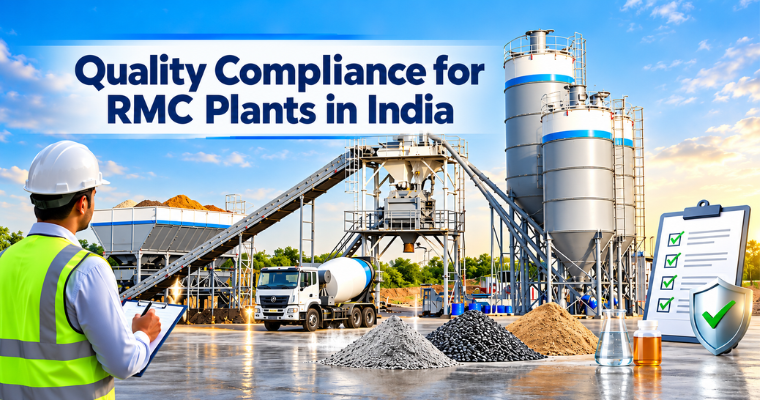
RMC and batching plants supplying structural concrete in India fall under IS 4925, which classifies plants from Class I (fully automatic) to Class IV (manual), sets weighing tolerances of around 2 percent for cement, 3 percent for aggregates, and 1 percent for water and admixtures, and requires periodic calibration. Projects executed under NHAI and similar government contracts typically mandate Class I or Class II plants with documented batch records, which is why PLC based automation has become the practical standard rather than an optional upgrade. A buyer evaluating any RMC plant should confirm the classification and calibration support offered before finalizing a purchase.
 Email Now!
Automation and Batch Consistency
PLC based automation has shifted from a premium feature to the baseline expectation for any serious RMC operation. An automatic concrete batching plant stores multiple mix designs in its control system and switches between them in seconds, which matters when a single day’s production covers several concrete grades for different customers or structural elements. Quick exhaust valves on the pneumatic weighing cylinders keep each batch within the tolerance a mix design calls for, rather than drifting as the shift wears on.
The practical benefit shows up in two places: fewer rejected batches during quality checks, and a documented batch record that satisfies both internal quality control and third party inspection on government contracts. Manual or semi automatic plants can still produce acceptable concrete, but the consistency and paper trail that automation provides has become difficult to substitute for on any project of meaningful scale.
Common Mistakes When Selecting an RMC Plant
Most plant selection regrets trace back to a small set of avoidable errors rather than a fault in the equipment itself. Reviewing these before finalizing a purchase order saves both capital and the operational headaches that follow a mismatched investment.
- Sizing the plant to current demand only, without allowing for pipeline growth over the next two to three years.
- Choosing a stationary inline plant for a project that will wrap up in under a year, when a compact or mobile unit would have avoided unnecessary foundation work.
- Overlooking calibration and after sales support during evaluation, which becomes critical once the plant is running under IS 4925 documentation requirements.
- Underestimating water source and power supply needs at the installation site, both of which affect uptime as much as the plant specification itself.
- Comparing plants purely on headline capacity without checking the mixer type, automation level, and weighing tolerance behind that number.
Where RMC Plants Are Used
Demand for RMC plants in India now extends well beyond traditional building construction. Government infrastructure spending and a maturing private construction sector have pushed adoption into project categories that relied on site mixing as recently as a decade ago, and that shift shows no sign of reversing given the scale of ongoing public works.
- National and state highway construction, where consistent concrete grades are mandated for pavement quality control.
- Metro rail and elevated corridor projects, which require continuous, high volume concrete supply on tight schedules.
- Smart city and urban infrastructure programs, including water and drainage networks that use precast and cast in place concrete.
- Residential townships and commercial real estate developments, where RMC reduces onsite labor and construction time.
- Precast concrete manufacturing units, which rely on batch consistency to meet dimensional tolerances.
- Industrial and airport construction, where large pour volumes make onsite mixing impractical.
Why Buyers Choose Apollo Inffratech for Their RMC Plant
Apollo Inffratech manufactures the full ATP range of inline and compact RMC and batching plants at an ISO certified facility in Mehsana, Gujarat, with the PLC automation and weighing accuracy needed to meet IS 4925 Class I requirements out of the box. Beyond the plant itself, buyers get access to nationwide installation support, annual maintenance contracts, calibration assistance, and spare parts availability, which matters as much to long term running cost as the initial purchase price.
For businesses building a complete concrete production and placement workflow, Apollo Inffratech also manufactures self loading concrete mixers for smaller or remote pours and slip form pavers for road and pavement work, allowing a single vendor relationship to cover more of the project rather than coordinating between multiple equipment suppliers.
Conclusion
Selecting an RMC plant comes down to three decisions made in sequence: understanding whether your business needs a wet mix or dry mix system, choosing a site configuration that matches how long the plant will operate at one location, and sizing capacity against your actual production hours rather than an assumed maximum. Getting these right the first time avoids the two most common and costly mistakes in RMC investment: underinvesting in a plant that cannot scale with demand, and overinvesting in capacity that sits idle.
Apollo Inffratech’s ATP series is engineered to give buyers a clear path through this decision, with documented capacity bands, IS 4925 compliant automation, and support that continues well after commissioning. Reach out to discuss your project’s concrete volume and timeline, and the right ATP configuration for it.
Frequently Asked Questions
RMC Plant Guide: Types, Components, and How to Choose the Right Capacity
What is the difference between an RMC plant and a concrete batching plant?
The terms are used interchangeably in most of the Indian market. Technically, a batching plant refers to the equipment that weighs and mixes materials, while an RMC plant refers to the business operation of supplying ready mixed concrete using that equipment, whether to a single captive project or to multiple external buyers.
What is the minimum RMC plant capacity suitable for a new business?
Most first time RMC operators in India start with a plant in the 25 to 31 cubic meter per hour range, such as the ATP 25 or ATP 31 Compact, which balances a manageable capital outlay with enough output to serve residential and small commercial projects.
How is RMC plant capacity actually measured?
Capacity is expressed as the volume of finished concrete a plant can produce per hour under normal operating conditions, measured in cubic meters per hour. Real world output typically reaches close to, though slightly below, the plant's rated theoretical maximum due to batch cycle timing.
Is IS 4925 compliance mandatory for RMC plants in India?
IS 4925 sets the accepted national standard for batching and mixing plant classification and weighing tolerances. While not every private project enforces it strictly, IS 456 requires weight based batching for structural concrete, and government contracts such as NHAI highway works mandate IS 4925 Class I or Class II plants.
What is the difference between wet mix and dry mix RMC plants?
Wet mix plants combine all materials in a mixer at the plant before loading the transit mixer, giving tighter control over consistency. Dry mix plants load weighed dry materials directly into the transit mixer, which completes mixing during transport, an approach suited to projects with longer haul distances.
How long does it take to install and commission an RMC plant?
Compact plants, which need no foundation, can often be erected and commissioned within a few weeks. Inline plants require foundation work and a more involved civil setup, which typically extends the installation timeline, though the exact duration depends on site readiness and local approvals.
Share At:




Listen to the Audio Version
Table of Contents