
Table of Contents
The construction industry is undergoing rapid growth, especially in emerging economies like India, where infrastructure development is a major priority. However, as the demand for concrete increases in remote and less-developed areas, logistical and environmental challenges arise. Establishing concrete batching plants in such regions is no easy feat, as it involves overcoming the difficulties of transporting heavy equipment, managing environmental constraints and ensuring a steady supply of materials. To address these issues, construction projects in remote locations are increasingly relying on advanced concrete mixing technologies, such as self-loading mixers, portable concrete plants and other innovative solutions. This article will discuss how construction companies can manage these hurdles and provide insights into overcoming logistical and environmental challenges with modern concrete equipment.
Concrete Mixer in India: Key Challenges in Remote Locations
India is one of the fastest-growing markets for the construction industry, where the demand for concrete solutions is particularly high. However, the country’s vast geography, with varying levels of infrastructure, presents a unique challenge for the transportation of construction concrete mixers and other concrete mixing equipment to remote locations. Roads in rural and isolated areas are often poorly developed, leading to difficulties in transporting large-scale concrete machinery. Heavy-duty concrete equipment such as concrete mixture machines and ready mix concrete pumps may face delays or damage while being transported, increasing the overall project costs.
One of the most prominent solutions to overcome this logistical challenge is the use of self-loading concrete mixers. These innovative machines combine both the mixing and transport functions into one, allowing concrete to be mixed on-site and transported without requiring additional vehicles or infrastructure. The development of such machines has revolutionized concrete production in remote locations, making them more efficient and cost-effective.
 Call Us Now!
Mixer Construction Equipment: How Technology Helps Overcome Infrastructure Barriers
The construction of concrete batch plants in remote locations requires not only a steady supply of raw materials but also machinery that can withstand harsh conditions. Heavy equipment like concrete mixing equipment must be reliable and versatile enough to function in areas with minimal infrastructure. In remote locations, traditional concrete batch plants may not be feasible due to their size and the logistical constraints of transporting materials and machinery.
Modern mixer construction equipment, such as portable and modular concrete plants, is providing a solution for such challenges. Portable batching plants can be quickly assembled on-site, reducing transportation costs and time. These plants can be moved as needed, making them ideal for construction projects in remote locations where the demand for concrete may be temporary or variable. Furthermore, these systems can be equipped with mobile concrete pumps, ensuring that concrete is mixed, transported and pumped without delay.
The role of self-loading mixers also cannot be overstated. These machines can load, mix and transport concrete directly to the construction site, ensuring minimal handling and eliminating the need for additional machinery. This type of mixer is particularly advantageous in places where accessibility to traditional concrete equipment is limited or where roads are narrow and rough.
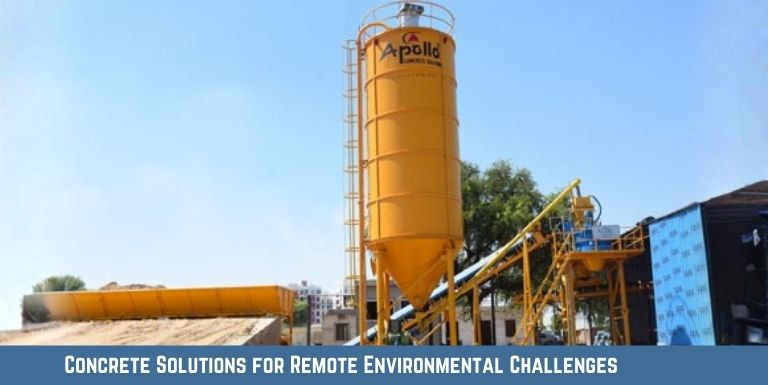
Concrete Solutions: Overcoming Environmental Challenges in Remote Locations
Environmental conditions can pose significant challenges to the production and use of concrete in remote areas. Factors such as high temperatures, heavy rainfall and even water scarcity can affect the quality and efficiency of the concrete mix. For instance, extreme heat can lead to faster drying times, affecting the curing process and potentially compromising the quality of the concrete. On the other hand, excessive moisture or cold temperatures can prevent proper curing and hardening, leading to delays and inefficiencies.
To mitigate the environmental challenges faced in remote locations, the use of advanced concrete solutions is critical. For example, using high-performance concrete that can withstand extreme weather conditions is a practical approach. This type of concrete is specially designed to be more durable and adaptable to varying temperatures, ensuring that the construction project proceeds without major delays, regardless of the climate.
Another solution lies in the development of self-loading concrete mixers that can operate efficiently in harsh environments. These mixers are equipped with advanced technology that allows them to function even in high-heat or cold conditions, ensuring that concrete is mixed and transported effectively. Additionally, environmental controls can be integrated into concrete batch plants to ensure consistent water usage, helping to conserve water in areas with limited resources.
Our Other Product
Compact Concrete Batching PlantReady Mix Concrete Pump: Improving Efficiency in Remote Areas
A ready mix concrete pump is an essential piece of equipment for delivering concrete directly to the construction site. In remote locations where access to the construction site is difficult or roads are underdeveloped, the ability to pump concrete directly to the required area significantly improves the efficiency of the project. Using a ready mix concrete pump eliminates the need for additional transportation, allowing the concrete to be delivered in a timely and cost-effective manner.
In addition to their utility in improving delivery, ready mix concrete pumps also ensure consistent quality control. Concrete that is pumped directly from the batch plant to the site minimizes the risk of segregation and ensures that the concrete mix is uniform and properly proportioned. This is especially important in large-scale construction projects where consistency in concrete quality is essential for structural integrity.
Concrete Batch Plant Cost: Factors Affecting Investment in Remote Locations
The cost of setting up a concrete batch plant in remote locations is one of the most significant factors to consider when planning construction projects. Establishing a concrete batch plant requires substantial investment in terms of machinery, raw materials, transportation and labor. When constructing in remote areas, additional costs related to logistics, such as the transportation of concrete mixers, concrete mixing equipment and other machinery, can increase the overall cost significantly.
However, the long-term benefits of having a concrete batch plant on-site can often outweigh the initial investment. By using concrete batch plants, construction companies can achieve better control over the quality of their concrete, reduce the reliance on external suppliers and ensure that the project timeline is adhered to without delays in material delivery. The use of self-loading concrete mixers and ready mix concrete pumps can also help reduce the need for multiple vehicles and manpower, ultimately lowering operational costs.
For those seeking to minimize the financial burden of setting up a concrete batch plant, modular plants provide an affordable alternative. These plants can be easily transported, set up and dismantled as needed. Furthermore, they offer flexibility in terms of capacity and can be scaled to meet the requirements of specific projects.
Testimonials
“It was a wonderful experience to deal with the largest manufacturer of concrete construction equipments.”
Self-Loading Batching Plant: A Versatile Solution for Remote Locations
A self-loading batching plant is an ideal solution for remote construction sites that require both mixing and transportation of concrete. These plants come equipped with a variety of features that allow them to perform in rugged conditions. A self-loading batching plant not only simplifies the construction process by offering an integrated solution for concrete production but also reduces the need for additional resources such as transport trucks.
The self-loading batching plant is typically compact, mobile and easy to operate, making it well-suited for remote areas where space and access to infrastructure are limited. Additionally, these plants can be customized with advanced technology to monitor and control the mixing process, ensuring high-quality concrete is produced every time. This is particularly valuable in areas where conventional concrete batch plants are not feasible due to limited space or harsh terrain.
 Email Now!
Concrete Mix Plant: Reducing Transportation Costs and Delays
Concrete mix plants in remote locations can help reduce the costs and delays associated with transporting ready-mixed concrete over long distances. In traditional construction settings, concrete is often mixed off-site and transported to the project location, a process that can take time and result in delays. This is particularly true in remote areas where roads are inadequate and transportation is more costly.
The use of concrete mix plants on-site eliminates the need for transport vehicles, as the concrete is mixed and poured directly from the plant to the construction site. This not only saves on transportation costs but also reduces the chances of material degradation during transit. Additionally, the on-site mixing process allows for greater flexibility in adjusting the concrete mix as needed, depending on the requirements of the specific project.
Conclusion
Setting up concrete batching plants in remote locations presents a unique set of logistical and environmental challenges, but advancements in concrete mixing equipment and technology are making these projects more feasible. The use of self-loading concrete mixers, ready mix concrete pumps and modular concrete batch plants has significantly improved the efficiency of construction projects in isolated regions. By overcoming the challenges associated with transporting heavy machinery, managing environmental conditions and controlling costs, construction companies can ensure the successful completion of projects even in the most difficult-to-reach areas. These modern concrete solutions are reshaping the way construction is carried out in remote locations, offering a cost-effective and reliable approach to concrete production.
Table of Contents