
Table of Contents
Concrete Plants Powering Construction Growth
Concrete batching plants play a crucial role in the construction industry by providing essential concrete solutions for various building projects. These plants are the backbone of the construction sector, enabling efficient production of concrete required for everything from large infrastructure projects to smaller residential developments. With the increasing demand for ready-mix concrete, concrete batching plants have become indispensable for developers and contractors. The impact of these plants goes beyond just the production of concrete; they also influence the economy, employment and the development of new technologies, such as concrete mixing equipment and self-loading mixers.
 Email Us!
Construction Concrete Mixer: A Key Component in Concrete Production
One of the most significant innovations in concrete batching plants is the introduction of construction concrete mixers. These machines are used to blend cement, water and aggregates like sand, gravel or crushed stone to create concrete. The versatility and efficiency of modern concrete mixers make them indispensable for construction projects of all sizes. The construction concrete mixer can be used in a variety of settings, from small residential projects to large-scale commercial developments. With the rising need for fast-paced construction, the development of concrete mixers has led to the introduction of more sophisticated machinery, such as self-loading concrete mixers.
Concrete mixers come in different sizes and types, ranging from small, portable machines to large industrial-sized mixers. These concrete mixing machines can be stationary or mobile, depending on the project requirements. The advancement in mixing technology, including the use of advanced mixing drums and automated control systems, has greatly enhanced the quality of concrete produced, making construction projects more reliable and cost-effective.
Concrete Equipment: Essential Tools for Construction
Concrete equipment, including concrete mixers, batching plants and concrete pumps, are integral to the construction industry. The efficiency of these tools directly affects the productivity of construction projects. Concrete batching plants serve as a hub where raw materials are combined in precise proportions to produce high-quality concrete that meets the specific needs of each construction site. These plants can handle large volumes of concrete production, ensuring that the construction process runs smoothly without delays caused by material shortages.
Concrete equipment also includes various types of machinery used to transport, mix and pour concrete. For instance, ready-mix concrete pumps are commonly used to transport concrete to construction sites, especially in high-rise buildings or remote locations. These pumps are designed to efficiently move large volumes of concrete, reducing manual labor and the time required to complete projects. The availability of such equipment has significantly contributed to the growth of the construction sector.
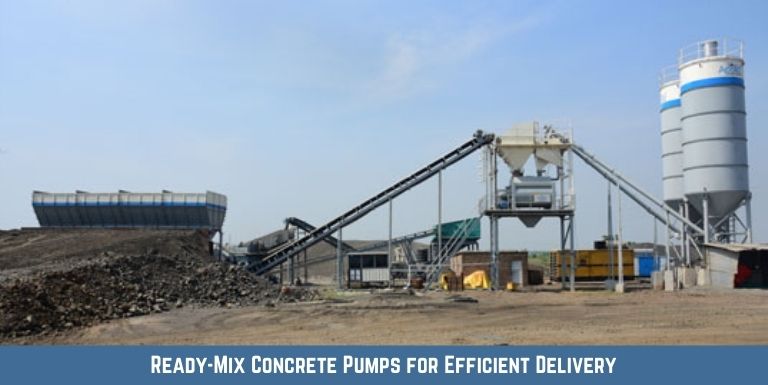
Ready-Mix Concrete Pump: Ensuring Efficient Concrete Delivery
The ready-mix concrete pump is a vital tool in modern construction projects. It enables the quick and efficient delivery of concrete to hard-to-reach areas of a construction site. Unlike traditional methods of pouring concrete, where workers would manually carry the material, a concrete pump delivers concrete directly from the batching plant to the desired location, ensuring consistent and timely material supply. This innovation has made large-scale construction projects more feasible, reducing downtime and increasing overall project efficiency.
Ready-mix concrete pumps are used in a variety of construction scenarios, including high-rise buildings, tunnels and bridges. The ability to pump concrete to various heights and distances has revolutionized the way large structures are built. This equipment has also reduced the amount of labor required on-site, helping contractors save on labor costs while ensuring high-quality results.
Our Other Product
Self-Loading Concrete MixersConcrete Mixer Manufacturer: Driving Innovation in the Industry
Concrete mixer manufacturers play a crucial role in shaping the future of the construction sector by developing innovative concrete mixing technologies. These manufacturers produce a wide range of equipment, including stationary mixers, mobile mixers and self-loading concrete mixers. The demand for more efficient and reliable concrete machines has prompted manufacturers to invest heavily in research and development, leading to the creation of state-of-the-art concrete mixture machines that streamline the construction process.
As the construction industry grows and diversifies, the need for specialized concrete equipment has also increased. Concrete mixer manufacturers are now focusing on producing machines that offer improved performance, higher durability and lower operational costs. This has helped make concrete production more efficient, driving down the overall cost of construction projects.
Testimonials
“If you buy concreat equipment.
Batching plant, self loading transit mixer, automatic block making machine, Paver machine, and pipe making machine, automatic cage welding machine, etc…..
Good service giving Spares and service to”
– Rakesh Patel
Concrete Mixture Machines: Efficiency and Precision in Concrete Production
Concrete mixture machines are designed to blend ingredients in the precise ratios needed to create strong, durable concrete. These machines have become indispensable in modern construction because they offer unmatched efficiency and consistency. The development of advanced concrete mixture machines has led to the creation of plants capable of producing large quantities of concrete quickly while maintaining strict quality control.
The efficiency of concrete mixture machines allows for the rapid production of large volumes of concrete, which is crucial in large-scale construction projects. These machines can be used to mix different types of concrete, including lightweight, high-strength and reinforced concrete, catering to a wide variety of construction needs. The ability to customize the mixture ensures that concrete used in each project meets the specific strength and durability requirements.
Concrete Mixing Equipment: Improving Production Efficiency
Concrete mixing equipment includes a variety of machines and tools used to produce concrete in large quantities. These include batching plants, mixers and pumps, which together create an efficient production process. Modern concrete mixing equipment is designed to minimize waste, reduce energy consumption and increase production speed, all of which contribute to lowering construction costs.
The latest advancements in concrete mixing technology have resulted in more automated equipment, which reduces the need for manual labor and minimizes human error. Automated systems in batching plants and mixers ensure that concrete is mixed to the exact specifications needed, improving both the quality and consistency of the product.
Concrete Mixing: A Vital Step in Construction
Concrete mixing is one of the most critical steps in the construction process, as the quality of the concrete produced determines the strength, durability and longevity of the structure being built. Proper concrete mixing requires precise measurements of water, cement, aggregates and additives, which must be blended in the right proportions. The introduction of automated concrete mixing systems has made this process more accurate and efficient, reducing the likelihood of errors and ensuring high-quality results.
Modern concrete mixers and mixing plants are equipped with advanced technology that ensures uniform mixing, preventing issues like segregation and inconsistent concrete strength. These innovations in concrete mixing technology have significantly enhanced the construction sector’s ability to complete projects on time and within budget.
Self-Loading Mixer: Revolutionizing Concrete Transport and Mixing
The self-loading mixer has become an essential tool for many construction projects. These mixers combine both mixing and transporting capabilities, allowing concrete to be mixed on-site and then delivered to various parts of the construction site. The self-loading mixer is especially useful in projects where access to ready-mix concrete plants is limited or where continuous mixing is required throughout the day.
Self-loading concrete mixers are equipped with loaders that can automatically load raw materials, mix the concrete and transport it to the construction site. This eliminates the need for multiple pieces of equipment, reducing the overall cost and complexity of construction. The self-loading mixer has proven to be particularly beneficial for smaller projects, where the volume of concrete needed is not large enough to justify the use of a full-scale batching plant.
 Call Us Now!
Self-Loading Concrete Mixers: Enhancing Flexibility and Productivity
Self-loading concrete mixers provide unmatched flexibility in construction, allowing contractors to produce and transport concrete on-demand. These mixers can handle a wide variety of concrete types, ensuring that construction projects are not delayed due to a shortage of materials. The ability to mix concrete directly at the construction site also reduces the risk of transportation delays and ensures that the concrete is fresh and ready for use.
The efficiency of self-loading concrete mixers has made them a popular choice in the construction industry, particularly for smaller-scale projects or projects in remote areas where access to larger batching plants is limited. These machines have allowed construction companies to streamline their operations, reduce costs and increase productivity.
Read Our Article
How To Prepare Ready Mix Concrete With Concrete Equipments?Conclusion
The economic impact of concrete batching plants on the construction sector is undeniable. From improving the efficiency of concrete production to reducing the overall cost of construction projects, these plants and the equipment they rely on, such as concrete mixers, pumps and self-loading mixers, have transformed the industry. The ability to produce high-quality concrete quickly and reliably has led to faster project completion times, contributing to economic growth in the sector. As construction demands continue to rise, the continued innovation in concrete equipment and the efficiency of concrete batching plants will be essential in meeting the needs of the industry while fostering further economic development. Through advancements in technology, manufacturers and construction companies are not only increasing productivity but also enhancing the quality and sustainability of the built environment.
Share At:




Listen to the Audio Version
Table of Contents